Important Note Regarding Appointment Availability - Click Here

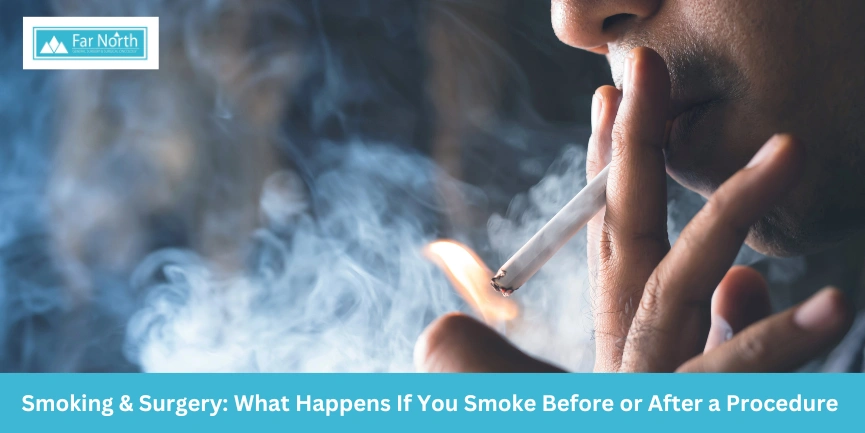
Smoking affects nearly every organ in the body, but its impact becomes even more important when surgery is involved. The connection between smoking & surgery complications is well known, as smoking can interfere with anesthesia, reduce oxygen flow, and slow the body’s ability to heal after a procedure.
Many patients preparing for surgery are often curious about what happens if you smoke before a surgery and if it is safe to smoke after surgery.
The truth is that smoking before or after a procedure can increase surgical risks or complications and delay recovery. Understanding these effects can help patients make safer choices before and after surgery.
This blog explains the risks involved in smoking before and after a surgery.
Your body needs to be in the best possible condition to handle the physical stress of an operation. Smoking works against this in several ways. It reduces the amount of oxygen your blood can carry to tissues, impairs circulation, and places added strain on both the heart and lungs, two systems that are already under significant demand during any surgical procedure.
This means that even before the first incision is made, your tissues may already be receiving less oxygen than they need.
For surgery to go smoothly and for your body to recover well, oxygen delivery is not optional, it is essential.
Smoking in the days or weeks leading up to your procedure can lead to a range of complications, some of which can become serious.
1. Anaesthesia complications are among the most immediate concerns. Smokers tend to have more reactive airways, which can make it harder to manage breathing during general anaesthesia. There is a higher likelihood of airway spasms, excessive mucus production, and difficulty maintaining stable oxygen levels while you are under.
2. Increased bleeding risk is another factor. Nicotine causes blood vessels to constrict, and the chemicals in tobacco affect how well platelets do their job. This can lead to heavier bleeding during the procedure.
3. Slower wound healing is perhaps the most well-documented effect. Smoking reduces blood flow to healing tissues, which means incisions take longer to close, tissue repair is delayed, and the risk of wound breakdown increases.
4. Higher infection risk follows as a consequence. Poorly oxygenated, slow-healing tissue is more vulnerable to bacterial infection, both at the wound site and in the lungs.
This is why many surgeons will advise patients to stop smoking several weeks before an elective procedure. It is not a preference; it is a medical recommendation backed by solid evidence.
Smoking changes the structure and function of the lungs over time. Airways become narrowed and inflamed, mucus clearance slows, and overall lung capacity is reduced. During surgery, this creates specific challenges for the anaesthesia team.
Patients who smoke are at significantly greater risk of breathing complications both during and after the procedure. Recovery from anaesthesia can take longer, and there is an elevated risk of developing postoperative Complications like pneumonia or other lung infections, particularly after surgeries involving the chest or abdomen, where deep breathing is already uncomfortable in the recovery period.
Even if you do not consider yourself a heavy smoker, any amount of tobacco use affects lung function in ways that matter during surgery.
This is a question many patients ask, and the answer is straightforward: no, it is not safe.
Once surgery is complete, your body's priority is healing. Smoking disrupts this process at every stage. Nicotine constricts the blood vessels that carry nutrients and oxygen to the wound site. Carbon monoxide starves healing tissue of the oxygen it needs. And the chemicals in tobacco suppress immune function, leaving you more susceptible to infection at a time when your defences are already stretched.
There is also a mechanical concern. Coughing, a common side effect of smoking, can place physical stress on healing incisions, potentially reopening wounds or disrupting internal sutures.
Even light or occasional smoking in the post-operative period is enough to slow recovery meaningfully.
Patients who smoke after surgery consistently take longer to heal, have higher chances of wound infection, and are more likely to require follow-up interventions than those who abstain.
The encouraging news is that the body begins to respond positively to smoking cessation relatively quickly. Within days of stopping, oxygen levels in the blood improve. Within weeks, circulation begins to recover and lung function starts to improve.
For surgical patients, even a short period of abstinence can make a measurable difference. Studies have shown that patients who stop smoking before surgery experience faster wound healing, lower rates of infection, fewer anaesthesia-related complications, and shorter hospital stays.
There is no single answer that applies to every patient, and your surgeon's specific guidance should always take priority. As a general principle, the longer you can abstain before surgery, the better. Several weeks is the commonly recommended minimum for elective procedures, as this allows time for oxygen levels to normalise, airways to settle, and the body's healing mechanisms to improve.
Stopping smoking even just 24 to 48 hours before surgery has been shown to reduce carbon monoxide levels in the blood, so while earlier is always better, it is never too late to make a positive change.
Smoking and surgery are a dangerous combination. The evidence is clear: smoking before a procedure increases the risk of anaesthesia complications, excessive bleeding, poor wound healing, and infection. Smoking after surgery slows recovery and raises the chances of complications that may require further medical attention.
The best outcome from any surgical procedure depends on preparation, and stopping smoking is one of the most impactful steps you can take.
Smoking significantly raises the risks associated with surgery but it is a risk you can actively reduce. At Far North Surgery, patients receive expert surgical care alongside honest, practical guidance to help them prepare for the best possible outcome.
Contact us today and take the first step toward a safer procedure and a smoother recovery.
Smoking before surgery can reduce oxygen flow, affect anesthesia response, and increase the risk of complications such as infections, delayed healing, and breathing problems.
Smoking after surgery may slow wound healing, reduce circulation, and increase the risk of infection and other recovery complications.
Smoking can affect lung function and breathing during anesthesia, which may increase the risk of respiratory complications and delay recovery after surgery.
Many surgeons recommend stopping smoking several weeks before surgery to help improve circulation, oxygen levels, and overall healing.
Yes, smoking can reduce blood flow and oxygen delivery to tissues, which may delay wound healing and increase the risk of complications.