Important Note Regarding Appointment Availability - Click Here

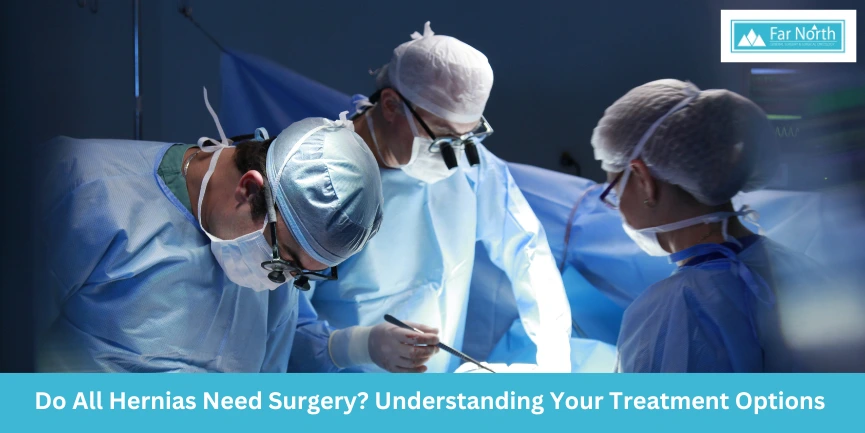
A hernia is a common condition that occurs when an organ or tissue pushes through a weakened area of muscle or connective tissue. While hernias can affect people of all ages, receiving a diagnosis often raises an important question: Do all hernias need surgery?
The answer is not always straightforward. Some hernias may be monitored for a period of time, while others require prompt surgical repair. Although not every hernia needs immediate treatment, hernias do not heal on their own and should always be evaluated by a medical professional. Today, patients have several treatment options available, including laparoscopic hernia repair and other forms of minimally invasive hernia surgery.
Hernias develop when an internal organ or tissue pushes through a weak spot in the surrounding muscle or connective tissue. This weakness may be present at birth or develop over time due to strain on the body.
Common types of hernias include:
Several lifestyle factors can increase the risk of developing a hernia, including heavy lifting, chronic coughing, obesity, aging, pregnancy, and previous abdominal surgery.
When patients ask, "Do all hernias need surgery?", the answer depends on several factors, including the type of hernia, the severity of symptoms, and the risk of complications.
In some cases, a hernia may be monitored rather than removed immediately. However, it is important to understand that hernias generally do not disappear without treatment. Over time, many hernias gradually enlarge and may become more symptomatic.
Even when symptoms are mild, regular medical evaluation is important. Monitoring allows a surgeon to assess changes in size, symptoms, and overall risk so that treatment can be recommended at the appropriate time.
1. Small Hernias With Minimal Symptoms: Patients with small hernias that cause little or no discomfort may be candidates for watchful waiting. Under medical supervision, the hernia is monitored for changes in size or symptoms, allowing treatment to be recommended if needed.
2. Patients With Significant Health Concerns: A patient's overall health influences treatment recommendations. For individuals with medical conditions that increase surgical risk, careful monitoring may be considered until surgery becomes necessary or safer to perform.
One of the most common concerns patients have is what happens if a hernia is left untreated. While every case is different, untreated hernias often become larger over time.
1. Worsening Symptoms
As a hernia grows, patients may experience:
These symptoms can gradually affect quality of life and make routine tasks more difficult.
2. Risk of Complications
More serious complications can occur if a hernia is left untreated:
Because of these risks, ongoing monitoring and timely treatment are important.
While some hernias can be observed, certain symptoms may indicate that surgical treatment should be considered.
These include:
Any sudden increase in pain, swelling, nausea, vomiting, or inability to reduce the hernia should be evaluated immediately.
1. Traditional Open Hernia Repair: Open hernia repair involves making an incision near the hernia site to return the tissue to its proper position and reinforce the weakened area. This approach remains an effective treatment option and may be recommended for certain hernia types or more complex cases.
2. Laparoscopic Hernia Repair: Laparoscopic hernia repair is a surgical technique performed through several small incisions using specialized instruments and a camera.
Potential benefits may include:
Many patients are candidates for this approach, although suitability depends on the individual situation.
While minimally invasive hernia surgery offers advantages for many patients, not every hernia can be treated using the same technique.
Surgeons consider several factors when determining the most appropriate treatment approach, including:
A thorough evaluation helps determine whether minimally invasive techniques or open repair will provide the best outcome.
Not all hernias require immediate surgery, but every hernia deserves proper medical evaluation. While some patients may safely undergo a period of observation, hernias do not heal on their own and may enlarge or become more symptomatic over time.
In some cases, untreated hernias can lead to complications that require urgent medical attention. By discussing symptoms and treatment options with a qualified surgeon, patients can determine the most appropriate approach for their individual situation and long-term health.
A hernia may not always require immediate surgery, but delaying evaluation can allow symptoms to worsen or complications to develop. At Far North Surgery, comprehensive assessment and personalized treatment plans help patients understand their options, from monitoring to advanced surgical repair.
Contact us today to discuss your symptoms and learn which hernia treatment approach may be right for you.
Light activity may be possible, but strenuous exercise and heavy lifting can worsen symptoms. Consult your doctor before starting or continuing an exercise routine.
Heavy lifting, chronic coughing, straining during bowel movements, and high-impact activities may increase pressure on the abdominal wall and aggravate a hernia.
Many hernias can be diagnosed through a physical examination, though imaging tests may be recommended in certain cases.
Recovery varies depending on the type of repair and the individual patient, but many people can gradually return to normal activities within a few weeks.
While hernia repair is generally effective, recurrence is possible in some cases, particularly if risk factors such as obesity or heavy lifting persist.