Important Note Regarding Appointment Availability - Click Here

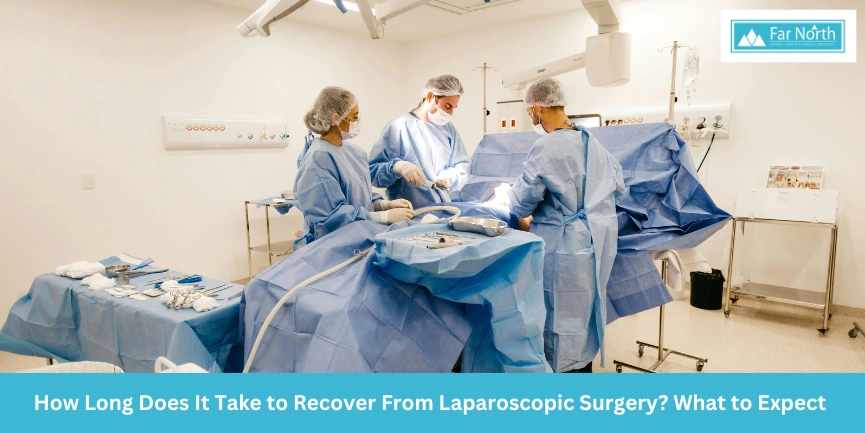
If you are preparing for minimally invasive surgery, one of your first questions may be, how long does it take to recover from laparoscopic surgery? There is no single timeline that applies to every patient. Recovery depends on the procedure, your general health, the physical demands of your routine, and how your body heals.
Many people can begin light activities relatively soon after laparoscopic surgery. Full recovery after an operative laparoscopy, however, can take several weeks. The NHS notes that recovery after laparoscopic surgery may take up to six to eight weeks, depending on the procedure.
Small incisions are one advantage of laparoscopic surgery, but they do not mean all healing happens quickly. Understanding the different stages of recovery can help you plan for work, exercise, and everyday activities.
Laparoscopic surgery is a minimally invasive technique used to perform procedures through several small incisions rather than one large abdominal incision. It is also commonly called keyhole surgery.
During the procedure, the surgeon inserts a laparoscope, a thin instrument with a camera, through a small incision. Additional small incisions allow specialized surgical instruments to be used.
Depending on the condition and patient, laparoscopic techniques may be used for gallbladder surgery, hernia repair, appendix removal, colon procedures, and other abdominal operations. Far North Surgery, for example, lists laparoscopic surgery among the approaches used for hernia repair.
The answer depends largely on what was done during surgery.
A minor diagnostic laparoscopy and a more complex abdominal operation may both use small incisions, yet their recovery timelines can be very different. This is why patients should separate recovery into several milestones rather than focusing on one date.
These include:
Recovery usually happens gradually. Knowing what may occur during the first days and following weeks can make the process easier to understand.
Some soreness around the incisions and abdominal discomfort are common after laparoscopic surgery. Patients may also experience bloating, cramps, fatigue, nausea, or temporary shoulder pain. Shoulder discomfort can occur because gas is introduced into the abdomen during laparoscopy to create space for the procedure.
During this stage, your surgical team may recommend:
Walking is often encouraged after surgery because staying mobile is an important part of postoperative recovery.
As healing progresses, soreness usually decreases and energy and mobility gradually improve. You may be able to handle more household activities, walk farther, and begin returning to your regular routine.
Returning to work is more individual. Someone with a desk job may be ready sooner than someone whose job requires lifting, pushing, pulling, or prolonged physical activity.
Do not use the appearance of your incisions alone to judge your readiness for strenuous exercise. The tissues beneath the skin are still healing. Follow your surgeon's instructions before increasing exercise or lifting heavier objects.
Two patients undergoing laparoscopic surgery may have different recovery experiences. Important factors include:
Recovery is not about staying in bed until you feel completely normal. It is generally a gradual return to activity while protecting healing tissues.
Follow these practical steps:
Avoid pushing through significant pain simply to return to your normal routine sooner. Recovery instructions are based on the operation you had, so individualized guidance is more useful than a generic timeline.
Your discharge instructions should explain which symptoms require medical attention.
Contact your surgical team if you develop concerning or unexpected changes such as worsening abdominal pain, persistent vomiting, fever, or increasing redness, warmth, bleeding, or drainage around an incision. Difficulty eating or drinking and other symptoms identified in your discharge instructions should also be reported.
If something does not feel consistent with the recovery your surgeon described, contacting the surgical team can help determine the appropriate next step.
Laparoscopic surgery often allows patients to resume some everyday activities sooner than traditional open procedures, but recovery still requires time. The procedure performed, your health, your job, and your individual healing all influence when you can safely return to your normal routine.
If you are considering minimally invasive surgery, Far North Surgery can evaluate your condition and discuss the surgical approach, expected recovery, and activity restrictions based on your individual needs. Schedule a consultation to learn whether laparoscopic surgery may be appropriate for you.
It depends on your procedure and job. Patients with sedentary work may return sooner, while jobs involving substantial physical activity may require a longer recovery period or temporary restrictions. Ask your surgeon for a return-to-work timeline specific to your operation.
Walking is commonly encouraged relatively soon after surgery when your surgical team says it is safe. Start gently and increase the distance and frequency gradually based on your recovery and postoperative instructions.
The timeline varies by operation. Heavy lifting and strenuous exercise may need to be restricted while internal tissues heal. Resume these activities only according to your surgeon's instructions.
Fatigue can continue during recovery even when pain and mobility are improving. Surgery, anesthesia, disrupted sleep, and the body's healing process can all contribute. If fatigue is severe, worsening, or accompanied by other concerning symptoms, contact your healthcare team.