Important Note Regarding Appointment Availability - Click Here

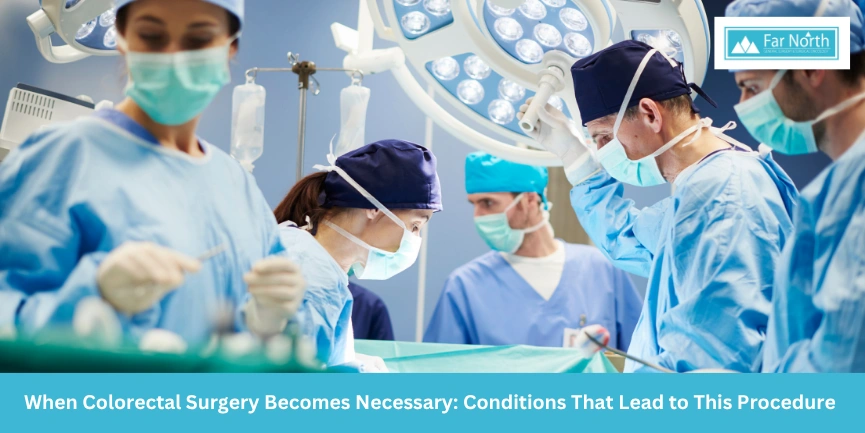
Colorectal surgery is generally considered when a disease or structural problem involving the colon or rectum can't be managed safely without an operation, when complications develop, or when diseased tissue needs to be removed. A new diagnosis or an abnormal test result doesn't automatically mean surgery is next.
Whether an operation becomes the recommended path depends on the specific diagnosis, how advanced or severe the condition is, whether complications are present, what imaging shows, and a patient's overall health. Several situations commonly lead to this conversation, including colorectal cancer, diverticular disease, bowel obstruction, polyps that can't be removed endoscopically, inflammatory disease, and certain rectal conditions.
In medicine, an indication is simply the reason a doctor recommends a particular treatment. For colorectal surgery, that reason might surface during a colonoscopy, show up on imaging, or become clear when a patient develops sudden, severe symptoms.
Some indications lead to planned, elective surgery, with weeks of testing and consultation before anything is scheduled. Others become urgent or even emergency situations, particularly when complications threaten normal bowel function or overall health. The type and extent of the operation also depends heavily on exactly where in the colon or rectum the problem is located.
Colorectal cancer is one of the most common reasons a surgeon recommends this type of operation. When cancer is confirmed, removing the tumor along with a margin of surrounding tissue is typically central to treatment, sometimes alongside chemotherapy, radiation, or both, depending on the stage.
Several symptoms may prompt further investigation, including:
Colorectal cancer doesn't always cause obvious symptoms in its early stages, which is one reason symptoms alone can't determine whether surgery is needed. A confirmed diagnosis, the tumor's location and stage, imaging and pathology findings, and the patient's overall health all shape the surgical plan.
Diverticulitis develops when small pouches that form in the colon wall become inflamed or infected. Most episodes respond to antibiotics, dietary changes, or other non-surgical care, but certain circumstances can shift the conversation toward surgery, including:
A single uncomplicated episode of diverticulitis doesn't automatically mean a patient will need colon surgery. Many people manage the condition for years without ever needing an operation.
A bowel obstruction happens when something blocks food, fluid, gas, or stool from moving normally through the intestine. Depending on the cause and severity, some obstructions can initially be managed without surgery, using measures like bowel rest.
Bowel obstruction surgery becomes more likely when the blockage doesn't resolve with conservative treatment, when it's a complete mechanical obstruction, when blood supply to the bowel appears threatened, when perforation or another serious complication develops, or when a tumor or structural narrowing is the underlying cause.
Not every obstruction requires an operation, but any of these symptoms warrant prompt medical attention so a care team can determine the safest next step.
Many colon polyps are discovered and removed safely during a routine colonoscopy. Surgery enters the discussion when a polyp is too large or technically difficult to remove endoscopically, shows features suggesting invasive cancer, or can't be completely removed with endoscopic tools alone.
Pathology results, the detailed examination of tissue removed during a procedure, help determine what happens next and whether a more extensive procedure is needed to fully address the area of concern.
A number of additional conditions can also lead to colorectal surgery, though each involves its own distinct evaluation.
1. Selected Inflammatory or Structural Conditions
2. Certain Rectal Conditions
The operation itself differs substantially depending on which condition is present, so this is meant as an overview rather than a full guide to treatment.
Deciding whether colorectal surgery is necessary is rarely based on one factor alone. Surgeons weigh the whole clinical picture, including:
Surgery is generally recommended because of what a disease is doing, or is likely to do if left untreated, rather than because of a single symptom in isolation.
The right operation depends entirely on the underlying condition and its extent.
In many cases, healthy sections of bowel can be reconnected. Some situations, depending on the disease and the operation performed, may require a temporary or permanent ostomy instead.
A surgical consultation is generally appropriate if you have a confirmed colorectal diagnosis for which surgery has been suggested, cancer or suspicious pathology has been identified, you're dealing with recurrent or complicated diverticular disease, a large colon polyp isn't suitable for routine endoscopic removal, you have structural narrowing or a recurring obstruction, or persistent symptoms haven't been fully explained.
That said, severe abdominal pain, inability to pass stool or gas, or signs of significant bleeding call for emergency care rather than a scheduled appointment.
Indications for colorectal surgery vary widely from one patient to the next, and the decision should always be individualized rather than assumed from a diagnosis or symptom alone. Not every case leads to an operation, and not every operation looks the same. Minimally invasive surgery isn't automatically the right fit for every patient or condition.
If you've been told you may need colorectal surgery, or you're dealing with symptoms that haven't been explained, Far North Surgery can help you understand your diagnosis and your options.
Contact us to schedule a consultation with Dr. Madhu Prasad.
Surgery is a central part of treatment for most colorectal cancers, though the extent of the operation and whether additional treatments like chemotherapy or radiation are needed depends on the cancer's stage, location, and other individual factors.
Yes. Many people manage diverticulitis with antibiotics, dietary adjustments, and other non-surgical care. Surgery is generally reserved for recurrent, persistent, or complicated cases involving an abscess, perforation, stricture, fistula, or obstruction.
Severe or worsening abdominal pain, significant abdominal swelling, persistent vomiting, inability to pass stool or gas, and fever are all reasons to seek prompt medical evaluation.
Not necessarily. Some polyps are simply too large or in a difficult location for safe endoscopic removal. Pathology results determine whether the tissue shows any cancerous or precancerous features and guide the next step.
Not always. Many patients have their healthy bowel reconnected during the same operation. Whether a temporary or permanent ostomy is needed depends on the specific condition, the extent of surgery, and how the bowel heals.