Important Note Regarding Appointment Availability - Click Here

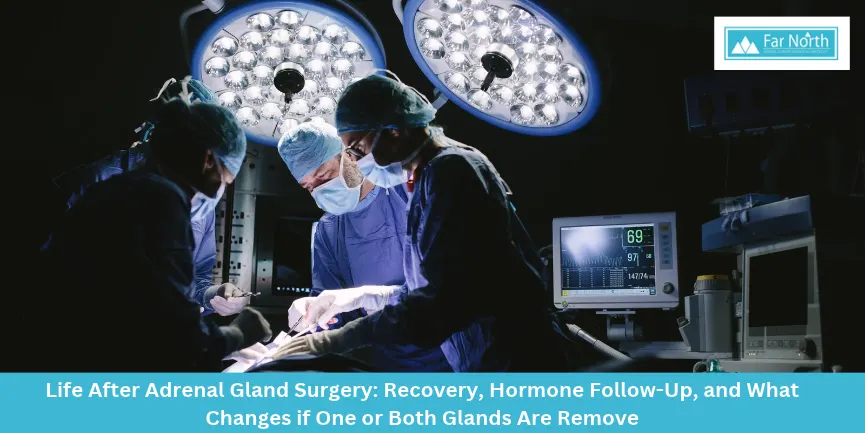
The operation is over, the incisions are healing, and the questions start. How soon will energy return? Will daily hormone pills be part of life now? What counts as normal recovery, and what deserves a phone call?
Life after adrenalectomy looks different depending on why the gland was removed and whether one or both glands came out. Knowing the usual timeline, the role of hormone follow-up, and the warning signs makes the weeks ahead far more predictable.
Most adrenal operations are done laparoscopically, through one to four small incisions, and many patients go home the same day. Open surgery, used more often for larger tumors, can mean a hospital stay of up to five days, based on typical hospital stays and recovery times after adrenalectomy.
Recovery generally takes one to two weeks, and longer after open surgery. Most people recover without complications within two to three weeks.
Incision soreness is expected, and holding a pillow over the incisions when coughing or breathing deeply can ease discomfort. Symptoms caused by the tumor, such as sweating or high blood pressure, often begin to improve quickly.
Activity returns gradually, step by step. Walking is encouraged early, while lifting and strenuous exercise wait for clearance. The laparoscopic recovery timeline shows what steady progress looks like, and the after-surgery guide covers home care in more detail.
When a tumor makes too much cortisol, the brain responds by turning down the signal that tells the adrenal glands to work. The healthy gland on the other side can become sluggish as a result.
After the tumor is removed, the body may briefly have too little cortisol, because the remaining gland needs time to wake up.
Doctors often prescribe temporary replacement, usually a steroid such as hydrocortisone, and taper it as testing shows the gland recovering. Blood tests that measure cortisol help the care team decide when the dose can come down and when it is safe to stop.
That recovery can take weeks to months, and sometimes longer. Plans differ from patient to patient, because tumors that release other hormones, such as aldosterone or adrenaline, affect the body in different ways.
When only one gland is removed, the healthy gland usually takes over the work, and long-term replacement is often unnecessary. Some patients still need temporary medication while it recovers, as described above.
When both glands are removed, the body can no longer make its own cortisol or aldosterone, so replacement becomes lifelong. Cortisol is typically replaced with hydrocortisone or a similar steroid, taken on a schedule that follows the body's natural daily rhythm. Aldosterone is replaced with fludrocortisone.
Many people lead full, active lives on replacement therapy. The adjustment is learning the routine: taking doses on time, increasing them during illness or surgery when instructed, and never running out.
Low cortisol can develop slowly, and its symptoms are easy to blame on ordinary recovery. Contact the care team about:
Some signs call for emergency care rather than a phone call: severe weakness, repeated vomiting or diarrhea, confusion, fainting, chest pain, or sudden intense pain in the back, abdomen, or legs. These can signal an adrenal crisis, which needs urgent treatment.
Fever, a red or draining incision, or pain that medication does not relieve also deserve a prompt call.
Follow-up usually includes visits with the surgeon and an endocrinologist, along with blood tests that check hormone levels and guide medication changes. If the tumor was cancerous, imaging may also be used to watch for recurrence.
Patients on replacement hormones are often advised to carry a medical alert card or wear a bracelet, keep a spare supply of medication, and ask about an emergency injection kit.
These steps matter even more for anyone living far from a hospital or traveling often, which describes many people across Alaska. Ask for written instructions on what to do if you cannot keep medication down, because vomiting can make a missed dose dangerous.
Long-term hormone care is part of endocrine surgery follow-up, so ask who coordinates it before leaving the hospital.
Recovery from adrenal surgery is usually quick, but the hormone side deserves as much attention as the incisions. The type of tumor and the number of glands removed shape the plan, from short-term medication to lifelong replacement.
Knowing the warning signs and keeping follow-up appointments turns uncertainty into a routine you can manage.
If you are preparing for adrenal surgery or have questions after an operation, Far North Surgery in Anchorage can help you plan the next step. Contact us to schedule a consultation.
Not always. If one gland is removed and the other is healthy, replacement is often temporary. If both glands are removed, lifelong replacement of cortisol and aldosterone is typically needed. Your surgeon and endocrinologist can tell you which applies after pathology results and blood tests.
Incision recovery typically takes one to two weeks, longer after open surgery, but energy can lag while hormone levels settle. If tiredness is getting worse rather than better, tell the care team, since it can reflect low cortisol rather than normal healing.
It can be if it is missed or untreated. Low cortisol is manageable with replacement, but an adrenal crisis is a medical emergency. Learning the warning signs, carrying medical identification, and following sick-day dosing instructions lowers the risk.
Often, when a hormone-producing tumor was driving it. Blood pressure that was high because of the tumor frequently improves after removal, but the change varies from person to person. Home readings and follow-up visits show how your body is responding.